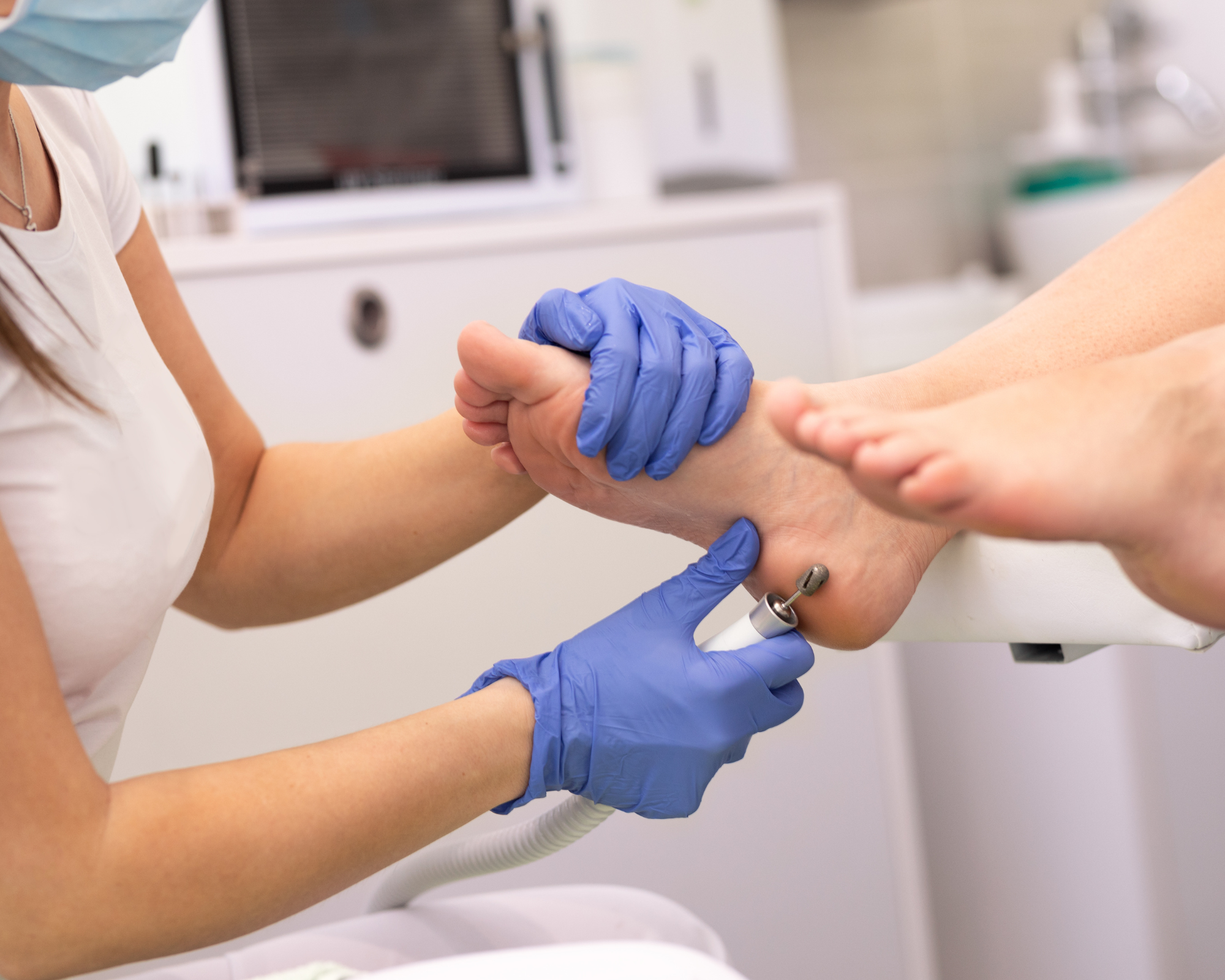
Podiatry
About Podiatry
According to the American Podiatric Medical Association (APMA) a podiatrist is a doctor of podiatric medicine (DPM), also known as a podiatric physician or surgeon. Podiatrists diagnose and treat conditions of the foot, ankle, and related structures of the leg. Podiatrists can specialize in many fields, including surgery, sports medicine, wound care, pediatrics, and diabetic care.
American Association of Colleges of Podiatric Medicine (AACPM) has helpful information about the Podiatry career path at Explorepodmed.org. For the most up-to-date salary information, visit the U.S. Bureau of Labor Statistics website.
UW-Madison does not offer a Podiatry program. While this field is not among CPHA’s primary areas of advising expertise, we are here to support you in exploring the career, building helpful experiences, and navigating some aspects of professional program applications. Talk with us if you have questions!
On this page: Degree & Certification Paths | Explore Your Interest in Podiatry | Preparing for a Podiatry Program | Find a Program & Apply | Career Resources | Related CPHA Canvas Courses
Degree & Certification Paths
A Doctor of Podiatric Medicine (DPM) degree typically requires four years of podiatric medical school followed by three years of a medical and surgical residency program.
Explore Your Interest in Podiatry

Shadowing & Informational Interviews
An excellent way to explore your interest in podiatry is by talking directly with providers. Shadow or conduct informational interviews with podiatrists to learn what their day is like.

Volunteering
Health professions programs look for applicants who demonstrate a sustained commitment to serving others in healthcare and community settings. Learn more about opportunities to volunteer in clinical and non-clinical settings.
Jobs & Certifications
All podiatry programs expect that students gain experience in clinical settings and demonstrate their commitment to helping others. Explore patient care roles and other health jobs to gain experience working with people. Confirm that this work is something you enjoy!
Additional Exploration Resources
Watch this recording of the spring 2026 podiatry information session to hear from two students in podiatry school. They share helpful information about the profession as well as tips for applying to programs.
Plus, check out our guide on podiatry: a document provided to info session attendees that includes resources to learn more, ways to get involved and prepare, information about exams and the application timeline, and things you need for the application.
Preparing for a Podiatry Program
Podiatry Required Coursework
Requirements vary from school to school, so it’s always necessary to consult program websites. Pre-requisite courses may include:
| Topic | Credits/Semesters | UW-Madison Courses |
|---|---|---|
| Math | 3-5 credits or 1 semester | Some podiatry schools require math and/or statistics. Choose one of the following: Statistics 301 Statistics 371 An introductory statistics course in your major department. NOTE: Math 112 is a prerequisite for Chem 103 and Physics 103. In addition, Math 217 or 221 are prerequisites for Physics 201 and 207. |
| Statistics | 3 credits or 1 semester | Stat 301 Stat 371 An introductory statistics course in your major department Statistics 240 (Data Science Modeling) – Excellent choice for students who have AP credit for Stats 301 and wish to take a math/statistics course at the college level. This course teaches coding in “R.” If you don’t have credit for Stats 301 or 371 and take Stats 240, you should plan on taking Stats 340 for a deeper understanding of handling and analyzing data. |
| General Chemistry | 8-10 credits or 2 semesters | Choose one of the following sequences: Chem 103-104 Chem 109* Chem 115-116 (intended for Chemistry majors) *Many accept Chem 109 as equivalent to two semesters of inorganic chemistry; some may ask for a letter from the UW-Madison Chemistry Department describing the condensed nature of Chem 109. See Pre-Health Advising for more information if you have taken Chem 109 |
| Organic Chemistry | 6-8 credits or 2 semesters with labs | Chem 343 Introductory Organic Chemistry Chem 344 Introductory Organic Chemistry Lab Chem 345 Intermediate Organic Chemistry |
| Biochemistry | 3 credits or 1 semester | Some programs may not require Biochemistry, but it is tested on the MCAT. Choose one of the following sequences: Biochemistry 501 Biochemistry 507-508 |
| Biology | 8-10 credits or 2 semesters | Choose one of the following sequences: Zoology 101-102 and an additional bioscience course with lab such as Botany 130, Microbiology 101-102 OR 303-304, Anat&Phy 335/435, OR Anat&Phy 337 AND 338) Biology 151-152 Biocore 381-382 and 383-384 satisfies Intro to Bio requirements *Biocore: Students must apply to enroll in Biocore. For more information, visit the Biocore Website |
| Physics | 8-10 credits or 2 semesters with labs | Choose one of the following sequences: Physics 103-104 (algebra-based) Physics 201-202 (calculus-based; recommended for Engineering majors) Physics 207-208 (calculus-based; recommended for Life Science majors) EMA 201 + Physics 202 + BME 315 (for BME majors) Physics 247/248/249 (for Physics majors) *If physics is required for your major, select the sequence recommended by your major. If physics is not required by your major, physics 103-104 is an appropriate choice. |
| Social Science | Some programs may not require Social Science, but it is tested on the MCAT. Introductory Psychology: Psych 202 An intro Sociology course such as: GWS 103 – Gender, Women, Bodies and Health GWS 200 – LGBTQ Studies Soc 120 – Marriage and Family Soc 125 – American Society Soc 134 – Race and Ethnicity Soc 138 – Sociology of Gender Soc 140 – Community and Environmental Sociology Soc 170 – Population Problems Soc 181(H) or 211 – The Sociological Enterprise Soc 210 – Survey of Sociology | |
| English | 6 credits or 2 semesters | Most podiatry schools require at least 6 credits of English or literature, with an emphasis on composition. |
Most podiatry programs require the MCAT. Our MCAT 101 Canvas course will help you think about how to prepare for the MCAT.
Find a Program & Apply
The American Association of Colleges of Podiatric Medicine (AACPM) has a list of accredited podiatric medical schools in the US.
All accredited Podiatry programs use American Association of Colleges of Podiatric Medicine (AACPM) as a common application.
The American Association of Colleges of Podiatric Medicine Application Service® (AACPMAS®) is the AACPM’s centralized podiatric medical school application processing service. Most podiatric medical schools use AACPMAS as the application method for their first-year entering classes. AACPMAS serves only as an information clearinghouse and does not influence the podiatric medical schools’ appraisal or selection of applicants; instead, this decision is made by each school or college of podiatric medicine.
Career Resources
-
American Association of Colleges of Podiatric Medicine (AACPM)
-
AACPM National Mentoring Network
-
American Podiatric Medical Association (APMA)
-
American Association for Women Podiatrists (AAWP)
-
National Podiatric Medical Association (NPMA)
-
FinAid’s list of Loan Forgiveness programs
-
APMA Education Foundation Scholarship Fund
-
AACPM’s Scholarship and Loan Forgiveness Programs
-
APMSA’s Scholarship & Repayment Programs
Related CPHA Canvas Courses

Pre-Health 101
Our most important advising resource for first year students is Pre-Health 101, our online orientation on Canvas. It provides an overview of pre-health classes, activities, application timelines, and more.
Applying to Health Programs
CPHA runs a Canvas course called Applying to Health Programs, a non-credit course designed to help you with the process of applying to programs.
MCAT 101
CPHA runs a Canvas course called MCAT 101, a non-credit course designed to help you with the process of preparing for the MCAT. On this course, you’ll find tips on creating a study plan, tracking your progress, using stress to your advantage on the test, and more!