
Audiology
About Audiology
Audiologists are the primary healthcare professionals who provide services in the prevention, diagnosis, and evidenced-based treatment of hearing and balance disorders for people of all ages.
Audiologists specialize in identifying and assessing hearing and balance problems, rehabilitating persons with hearing and balance disorders, and preventing hearing loss. They work in a variety of settings, such as hospitals, clinics, private practice, ENT offices, universities, K-12 schools, government, military, and Veterans’ Administration (VA) hospitals.
To learn more about becoming an Audiologist, visit American Speech-Language-Hearing Association (ASHA). For the most up-to-date salary information, visit the U.S. Bureau of Labor Statistics website.
In addition to the resources below, we encourage you to connect directly with staff at UW’s Doctor of Audiology program. This page has information on pathways into Audiology and programs beyond UW-Madison. Audiology programs are not among CPHA’s primary areas of advising expertise, but we are here to support you in exploring the career, building helpful experiences, and navigating some aspects of professional program applications. Talk with us if you have questions!
On this page: Degree & Certification Paths | Explore Your Interest in Audiology | Preparing for an Au.D. Program | Find a Program & Apply | Career Resources | Related CPHA Canvas Courses
Degree & Certification Paths
An Au.D. is the entry-level degree for the clinical practice of audiology. This degree typically requires four years of study beyond the bachelor’s degree. However, the length of time it takes to complete a program can depend on the program.
Audiologists must earn a doctoral degree (an AuD) from a program accredited by the Council on Academic Accreditation and get a passing score on a national examination. To explore accredited programs, visit the CAA program listing.
Explore Your Interest in Audiology
Shadowing & Informational Interviews
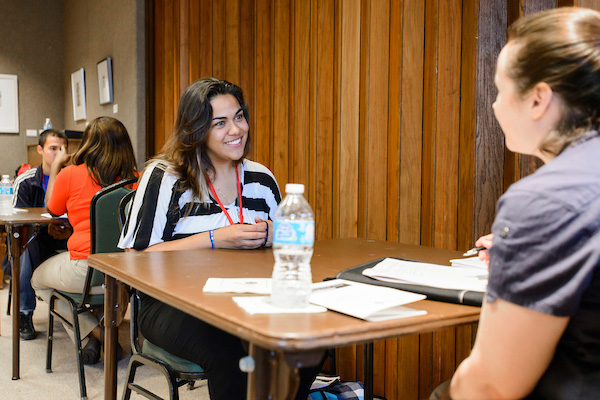
An excellent way to explore your interest in audiology is by working directly with providers. Shadow some Au.D.s to learn what their day is like. Conduct informational interviews with providers you admire and ask them about how the field has changed since the start of their practice.

Volunteering
Learn more about opportunities to volunteer through community outreach and in clinical and non clinical settings.
Jobs & Certifications
After volunteering and exploring, working in research or a healthcare setting is a great way to learn about practical aspects of the field.
Additional Exploration Resources
- Learn more about UW-Madison’s AuD program
- Contact the Department of Communication Sciences and Disorders
- Undergraduate advisor Katie Christenson (kathleen.christenson@wisc.edu)
- Clinical professor Amy Hartman (amy.hartman@wisc.edu)
- Connect with UW-Alumni on LinkedIn!
Preparing for an Au.D. Program
Requirements vary from school to school, so it’s always necessary to consult program websites. Pre-requisite courses may include Communication Sciences & Disorders Prerequisites such as:
Au.D. Required Coursework
| Topic | UW-Madison Courses |
|---|---|
| Normal Development of Speech and Language | CS&D 240 |
| Speech Acoustics / Speech Science | CS&D 303 |
| Hearing Science | CS&D 202 |
| Introduction to Audiology | CS&D 320 |
| Aural Habilitation | CS&D 425 |
| *Course in manual communication | CS&D 424 |
*A course in manual communication is required for graduation from the UW Madison Au.D. program. This course can be taken either prior to admittance into the program, or while enrolled in the Au.D. program.
General Prerequisites
- Life/Biological Sciences (Biology, Zoology)
- Physical Sciences (Physics and/or Chemistry preferred)
- Behavioral Sciences (Psychology, Sociology, Human Development, Political Science, Women’s Studies)
- Statistics
- English
Clinical Prerequisites
- 25 guided clock hours in clinical observation
Many programs require the Graduate Record Examination (GRE). The module “Prepare for the GRE” on our “Applying to Health Professions” Canvas course has more information on study plans, resources, and tips.
Find a Program & Apply
The American Speech-Language-Hearing Association (ASHA) has a resource called the EdFind with information on audiology programs in the US and Puerto Rico (just select “Audiology” under “Area of Study”). American Speech-Language-Hearing Association (ASHA) also links to a list of audiology programs accredited by the Council on Academic Accreditation (CAA).
Many Audiology and Speech-Language Pathology programs participate in each CSDCAS cycle. The Audiology and Speech-Language Pathology programs that do not participate in CSDCAS handle their application processes separately.
The CSDCAS Applicant Help Center shares more information about application components.
Read more about the CSDCAS Fee Assistance Program.
Many programs require the Graduate Record Examination (GRE). The module “Prepare for the GRE” on our “Applying to Health Professions” Canvas course has more information on study plans, resources, and tips.
Career Resources
Related CPHA Canvas Courses
Pre-Health 101
If you are a first year student or healthcare is a new interest, begin by signing up for Pre-Health 101: our free, self-paced online orientation course. It provides an overview of pre-health classes, activities, application timelines, and more.
Applying to Health Programs
CPHA runs a Canvas course called Applying to Health Programs, a non-credit course designed to help you with the process of applying to programs like accelerated nursing programs.