
Occupational Therapy
About Occupational Therapy
Occupational Therapists (OTs) work with people who are relearning or adapting skills they use every day such as eating, bathing, dressing, or essential for their work or life.
OTs may practice after attending an accredited OT program and passing a national certification exam. They may be generalists who work with a wide variety of patients in a hospital setting or they may be specialists who focus on a particular population or issue.
OT is a dynamic profession because our activities of daily living and environments where we do them are constantly changing!
On this page: Degree & Certification Paths | Explore Your Interest in Occupational Therapy | Preparing for OT School | Find a Program & Apply | Career Resources | Related CPHA Canvas Courses
Degree & Certification Paths
An MSOT is the traditional 2-year graduate degree path that prepares students to practice as licensed occupational therapists. MSOTs may practice after attending an accredited program and passing a national certification exam.
The OT profession is shifting from a Master’s degree toward a practicing doctorate degree, so you will encounter some programs that offer an option between a 2-year MSOT (Masters) or 3-year OTD (Doctorate).
A doctorate program will give you opportunities to do research in a clinical or field setting related to emerging issues or topics in OT. This research process helps you become more familiar with the body of literature around OT practice (why things are done a certain way) and helps you develop a process for answering emerging questions in the field. Since OT, as a profession, is moving toward the DOT, choosing a program that offers the DOT degree is an investment in your career and earning potential.
Explore Your Interest in Occupational Thearpy
Shadowing & Informational Interviewing
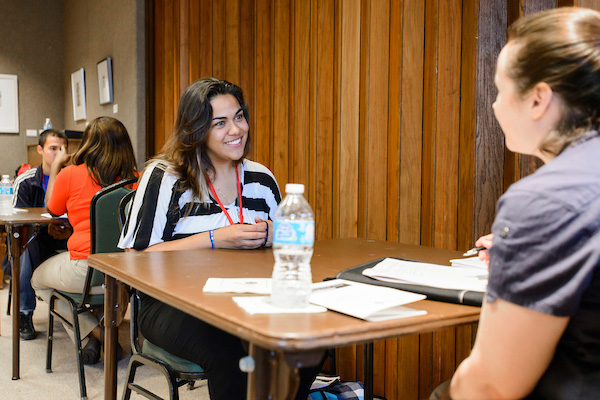
An excellent way to explore your interest in OT is by working directly with providers. If you are a current student, enroll in OT 100 which will give you 10 hours of shadowing! If you have friends or family who work in healthcare (in ANY role) ask if they know any OTs and arrange a Zoom chat. Look for OTs on LinkedIn, Instagram, or TikTok and see if they are willing to talk about their career.

Volunteering
OT programs look for applicants who demonstrate a sustained commitment to serving others. Learn more about opportunities to volunteer in clinical and non-clinical settings.
Volunteering in a rehab unit at a hospital is also a great way to learn about the field, talk to OTs, and see how they work within a team before committing to a job.
Jobs & Certifications
After volunteering and exploring, getting a job as a rehab aid, behavioral therapist or even working in personal care is a great way to learn about practical aspects of the field.
Preparing for OT School
OT schools use a process called holistic review to weigh personal factors, academic preparation, and professional experience when reviewing an applicant’s “readiness” for occupational therapy. Put together, these create a picture of you as a whole person.
In addition to having a clear motivation for the field, completing required coursework, shadowing, experience in clinical and community settings, and hobbies and interests are common admissions factors for OT schools. You may need to take the GRE depending on the program.
OT Required Coursework
Requirements vary from school to school, so it’s always necessary to consult program websites. Pre-requisite courses may include:
| Topic | Credits / Semesters | UW-Madison Courses | Is AP Accepted? |
|---|---|---|---|
| Biology | 8-10 credits or 1-2 semesters with lab *Not all schools require 2 semesters | Choose one of the following sequences: Zoology 101-102 and an additional bioscience course with lab such as Botany 130 or microbio 101-102 Biology 151-152 Biocore 381-382 AND 383-384 satisfies Intro to Bio requirements *Biocore: Students must apply to enroll in Biocore. For more information, visit the Biocore Website | If you have AP credit for Biology, plan to enroll in additional advanced Biology (see Additional Biology section below) once you’ve finished your intro Biology sequence. |
| General Chemistry | 3-4 credits of general chemistry with lab | Chem 108 Chem 103 | If you have credit for Chem 103, plan on taking Chem 104 so you have chemistry at the college level. |
| Social Science | Varies widely across programs! May include Intro psych, development, and/or abnormal psych | Intro Psych 202 Adult Psychopathology Psych 405 Development – some programs want to see human development across the lifespan. Select (1) course from each group: Early Development HDFS 262 Psych 460 Ed Psych 320 Ed Psych 331 Adult Development HDFS 263 Psych 464 | If you have credit for AP psych, plan on taking additional psych. |
| Humanities | Take 6 credits of English. Some programs specifically require a Speech course. | Advice for Finding English Courses | If you have AP English, take higher level English classes in college. |
| Anatomy / Physiology | 8-10 credits *Labs sometimes required | Anat/Phys 337 & 338 AND Anat/Phys 335 OR 435 | Not applicable |
| Statistics (Strongly Recommended) | 3 credits or 1 semester | Statistics 301 – Introduction to Statistics. Excellent choice for students with no prior knowledge of statistics and no experience coding. Statistics 371 – Introductory Applied Statistics for Life Sciences. Excellent choice for students who have AP credit for Stats 301 and wish to take a math/statistics course at the college level. This course teaches coding in “R.” Statistics 240 – Data Science Modeling. Excellent choice for students who have AP credit for Stats 301 and wish to take a math/statistics course at the college level. This course teaches coding in “R.” If you don’t have credit for Stats 301 or 371 and take Stats 240, you should plan on taking Stats 340 for a deeper understanding of handling and analyzing data. Introductory statistics in your department – Most schools accept introductory statistics from your major (Psych, Soc, Engineering, Business etc.), but check requirements! | If you have AP credit for stats, consider taking stats on campus |
| Medical Terminology (Strongly Recommended, Sometimes Required) | 3 credits or 1 semester | Classics 205 | Not applicable |
| Physics (Sometimes Required) | 1 semester with lab | Physics 103 | Not applicable |
| Additional Biology (Sometimes Required) | Some schools require a number of credits rather than specific courses. | Microbio 101-102 Immunology 341 Kines 314 or 318 | Not applicable |
Most OT programs require 20-40 hours observing (sometimes more) OTs in at least two different settings. Working or volunteering in clinics, and other healthcare settings gives you a chance to accomplish this while diversifying your experience with patients and healthcare teams.
Occupational therapy programs look for applicants who demonstrate a sustained commitment to serving others in healthcare and community settings. Learn more about service opportunities by visiting our Community Involvement page and choose opportunities and organizations aligned with your interests!
Research is an important way to develop skills that help you hone your capacity to learn and begin to contribute to the generation of new knowledge in fields of inquiry. Working in a research lab also gives you the opportunity to cultivate relationships with faculty who can serve as letter writers when you apply to a health professions program.
The Graduate Record Examination (GRE) is required by some, but not all, OT programs. The GRE is not a content exam meaning you do not need specific classes to take it. The GRE evaluates your writing, reasoning, and basic quantitative reasoning skills. Enroll in CPHA’s Applying to Health Professions self-paced course to learn more about the GRE.
What is the GRE?
The Graduate Record Examination (GRE) is a standardized content exam designed to assess verbal reasoning, quantitative reasoning, critical thinking and analytical writing skills. The GRE is an adaptive exam meaning that the difficulty of the questions you see are based on the number of correct responses you provide. Raw scores are scaled on a range of 130-170 for the verbal and quantitative reasoning sections and 0-6 for the written section.
- Analytical Writing requires you to provide a focused response and assesses the clarity, focus, relevance, and your command of English of that response.
- Verbal Reasoning (27 items) asks you to analyze and draw conclusions from discourse; reason from incomplete data; identify author’s assumptions and/or perspective; understand multiple levels of meaning, summarize text; understand the meaning of individual words, and relationships among words and among concepts.
- Quantitative Reasoning (27 items) includes algebra, data analysis, quantitative comparison, probability, statistics, and math word problems.
The Analytical Writing section will always be first. The Verbal Reasoning and Quantitative Reasoning sections may appear in any order after the Analytical Writing section. Section 1 of the verbal and quantitative reasoning section provide the baseline for the difficulty of questions you see in section 2.
GRE Exam Overview
| Section | Number of Questions | Time Allotted |
|---|---|---|
| Analytical Writing | Analyze an issue or task | 30 minutes |
| Verbal Reasoning Section 1 | 12 Questions | 18 minutes |
| Verbal Reasoning Section 2 | 15 Questions | 23 minutes |
| Quantitative Reasoning Section 1 | 12 Questions | 21 minutes |
| Quantitative Reasoning Section 2 | 15 Questions | 26 minutes |
| Total Content Time | 4 hours, 20 minutes | |
| Total Test Time | 3 hours, 35 minutes |
GRE Timelines
After completing the GRE, you get an unofficial score and will receive an official score within a month. Since the GRE is not a content-based exam and scores are valid for 5 years, you can take the exam when it suits you. Many students choose to prepare and take the exam during the summer a year before they apply. The GRE is offered year-round at ETS testing sites across the country so finding a test date typically is not a problem.
Studying for the GRE
There isn’t one “right” way to do well on the GRE, but people who are successful do these things:
- Assess yourself! You need to be honest with yourself about:
- Your attention span and the breaks you need
- Your test stress – you will need longer to prepare if you have high test stress
- The types of resources that work for you. It’s okay to try new study techniques and tools, but you cannot use all of them. If you convince yourself that you must complete everything in one section before you can move on, you will not make progress.
- Carve out regular time to study. You must build this into your schedule. If you study during the regular semester, treat the GRE like a class and block time for it!
- If you have low test stress (exams are your superpower!), carve out 10-12 hrs/week over 4-6 weeks
- If you have normal test stress, carve out 10-12 hrs/week over 8-12 weeks
- If you have high test stress, carve out 10-12 hours/week over 16-20 weeks
- You might take a course if you know you need the structure of a course and want some tutoring that often comes with it. However, you do not need a course to do well on the GRE if you can structure your time.
- Practice reading online so you get faster at reading passages; refresh math through pre-calc
- Take practice exams! Taking a practice exam before you start studying shows you your strengths and weaknesses and allows you to prioritize content.
- The module “Prepare for the GRE” on “Applying to Health Professions” has more information on study plans, resources, and tips. Enroll in CPHA’s Applying to Health Professions course – it’s free!
Find a Program & Apply
The American Occupational Therapy Association (AOTA) links to a program directory through the Accreditation Council for Occupational Therapy Education (ACOTE) with information on OT and OTA programs in the US and abroad including those that do not use Occupational Therapist Centralized Application Service (OTCAS).
OT schools use a central application called OTCAS, similar to the Common App, to collect biographical information, academic information, experience, and letters of recommendation in one place for schools to review. Applications open in July. It can be important to submit early if a school does rolling admissions so talk to us in CPHA about timing. Most schools also give you a chance to submit additional essays that are specific to their school called secondary essays. These essays are a chance to “speak” directly to a school about your interest in their program.
If an OT program does interviews, they can begin as early as August and go through December. In January, you can attend second-look weekends if you have been offered a spot at a school. Schools (and applicants) finalize their decisions in February and March, and you begin your program in June. The application process takes a full year!
Career Resources
-
American Occupational Therapy Association (AOTA)
-
American OT Association LGBTQ Network
-
Asian/Pacific Heritage Occupational Therapy Association (APHOTA)
-
National Black Occupational Therapy Caucus (NBOTC)
-
Occupational Therapy Network for Native Americans (OTNA)
-
Terapia Ocupacional para Diversidad Oportunidad y Solidaridad (TODOS) Network of Hispanic Practitioners
-
AHANA (African, Hispanic, Asian, and Native American) Pre-Health Society
-
Diverse OT
-
Health Occupations Students of America (HOSA)
-
Student Occupational Therapy Association
Related CPHA Canvas Courses
Pre-Health 101
Our most important advising resource for first year students is Pre-Health 101, our online orientation on Canvas. It provides an overview of pre-health classes, activities, application timelines, and more.
Applying to Health Programs
CPHA runs a Canvas course called Applying to Health Programs, a non-credit course designed to help you with the process of applying to OT programs. In this course, you’ll learn about the application, getting organized, writing essays, preparing for the GRE, school selection, paying for the application and OT school, interviews, and more.