
Accelerated Nursing
About Accelerated Nursing
Accelerated nursing programs are for people who want to enter nursing but are not enrolled in a nursing program or have already earned a bachelor’s degree. There are several pathways to nursing after completing your undergraduate!
For the most up-to-date salary information, visit the U.S. Bureau of Labor Statistics websites on Registered Nurses & Nurse Anesthetists, Nurse Midwives, and Nurse Practitioners.
Note: In addition to the resources below, we encourage you to connect directly with staff at UW’s Accelerated Bachelor of Science in Nursing (ABSN) program. This page has information on pathways to nursing and programs beyond UW-Madison. Accelerated nursing programs are not among CPHA’s primary areas of advising expertise, but we are here to support you in exploring the career, building helpful experiences, and navigating some aspects of professional program applications. Talk with us if you have questions!
Nursing Pathways
There are a lot of acronyms in nursing. Some describe the type of degree (BSN = Bachelor of Science in Nursing) while others describe the license (RN = Registered Nurse). To be a nurse, you must complete a BSN program and pass your licensing exam to be an RN.
| Degree | Level | License | Specialties |
|---|---|---|---|
| Bachelor of Science in Nursing (BSN) | Bachelor | Registered Nurse (RN) | Types of Nursing Specialties for BSNs |
| Master of Science in Nursing (MSN) | Master | Registered Nurse (RN) | Clinical Nurse Leader Nurse Administrator Public Health Nurse Educator More specialties |
| Doctor of Nursing Practice (DNP) | Doctoral | Advanced Practice Registered Nurse (APRN) Note: specialties often have their own licensing acronyms | Nurse Practitioner (NP) Clinical Nurse Specialist (CNS) Registered Nurse Anesthetist (cRNA) Certified Nurse Midwives (CNM) |
| Doctor of Nursing Science (DNS) | Doctoral | If you practice, you will be licensed in your specialty; most graduate programs require a valid RN license | People often pursue research related to a field or topic in which they have worked. Many people with a PhD in nursing will teach other nurses (faculty) while others work in hospitals or the private sector. |
| Doctor of Philosophy (PhD) | Doctoral | If you practice, you will be licensed in your specialty; most graduate programs require a valid RN license | People often pursue research related to a field or topic in which they have worked. Many people with a PhD in nursing will teach other nurses (faculty) while others work in hospitals or the private sector. |
| Doctor of Education (EdD) | Doctoral | If you practice, you will be licensed in your specialty; most graduate programs require a valid RN license | People often pursue research related to a field or topic in which they have worked. Many people with a PhD in nursing will teach other nurses (faculty) while others work in hospitals or the private sector. |
Explore Your Interest in Nursing
If you apply to nursing programs after your undergraduate, programs will want to see that you have worked with patients in clinical settings. Many students who apply to accelerated nursing programs have volunteered in free clinics, worked as CNAs or held other patient-facing roles in a hospital. Experience working with patients and nurses in clinical settings helps confirm why you want to do this, and gives you practical examples you can draw from as you write application essays.
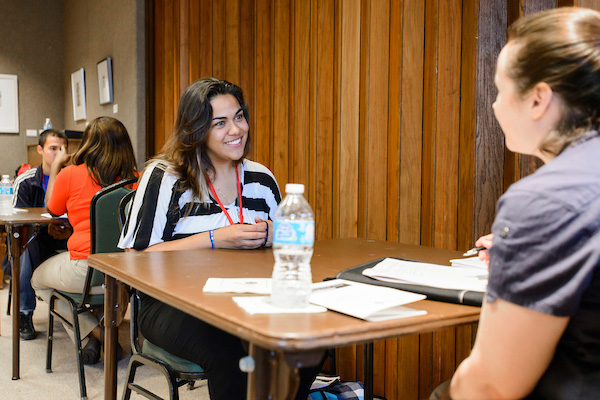
Shadowing & Informational Interviewing
An excellent way to explore your interest in nursing is by working directly with providers. If you have friends or family who work in healthcare (in ANY role) ask if they know anyone in nursing and arrange a Zoom chat. Look for nurses on LinkedIn, Instagram, or TikTok and see if they are willing to talk about their career.

Volunteering
Nursing programs look for applicants who demonstrate a sustained commitment to serving others. Learn more about opportunities to volunteer in clinical and non-clinical settings.
Jobs & Certifications
After volunteering and exploring, getting a job as a nursing care partner, personal care assistant, rehab aid, behavioral therapist, or getting your license and working as a CNA is a great way to learn about practical aspects of the field.
Finding a Program
The American Association of Colleges of Nursing has a great directory of programs to help you find direct entry programs at all levels! Use this as a starting point to gather information including:
- Course requirements
- Length of program
- Clinical and academic curriculum structure (in-person, online, hybrid)
- Clinical rotations and opportunities to specialize
- NCLEX pass rates (national exam for nurses required for licensure)
- Tuition and cost of attendance
- Application timeline
- Type of application – some schools use the central application system NursingCAS while others use their own application process. Pay attention to deadlines!
Preparing for Nursing Programs
Accelerated Nursing Required Coursework
This is not an exhaustive list, but pre-requisite courses for nursing programs often include:
| Topic | Credits/Semesters | UW-Madison Courses |
|---|---|---|
| Anatomy with lab (1) | 4-5 credits | Anatomy & Physiology 337 – lecture Anatomy & Physiology 338 – lab |
| Physiology with lab (1) | 4-5 credits | Chem 108, Chem 103, Chem 109, or Chem 115 |
| Microbiology with lab | 4-5 credits | Microbiology 101 or 303 – lecture Microbiology 102 or 304 – lab |
| Introductory Psychology | 3 credits | Psych 202 or 281 |
| Human Development | 3-6 credits | HDFS 262 HDFS 263 Psych 460 Psych 464 Ed Psych 331 |
| Biochemistry | 3 credits | Biochem 301 – for students who have not taken organic chemistry Biochem 501 – for students who have taken organic chemistry |
| Nutrition | 3 credits | Nutri Sci 132 or 332 |
| Statistics | 3 credits | A statistics course in your major Stats 301 or Stats 371 |
Note:
- A semester of introductory Biology is required prior to taking Anatomy or Physiology. Options include Zoo 101-102, Bio 151, or Biocore 381-382.
- If organic chemistry is required, Chem 341 is recommended. This course will also meet prerequisite requirements for Biochem 501.
- Less common courses include medical terminology (Classics 205), speech (CommArts 100), or abnormal psychology (Psych 405)
You may need to take the GRE. The module “Prepare for the GRE” on our “Applying to Health Professions” Canvas course has more information on study plans, resources, and tips for the GRE.
Application Process
Some programs use a centralized application service called NursingCAS. This centralized application gathers biographical and academic information in one place for schools. Not all programs use NursingCAS. There is a filter on the AACN Directory that shows programs that use this service.
To apply to programs, you will:
- Complete required courses, often with a C or better
- Submit at least (2) letters of recommendation. Requirements vary, but most programs would like to see a letter from a professional who can speak to your work ethic in a health care setting
- Write essays about your interest in the program and vision for nursing
- Submit copies of transcripts from all institutions where you have taken college courses
- You may need to take the GRE. The module “Prepare for the GRE” on our “Applying to Health Professions” Canvas course has more information on study plans, resources, and tips for the GRE.
- Sign up for email updates and pay attention to deadlines!
Enroll in Applying to Health Programs
CPHA runs a Canvas course called Applying to Health Programs, a non-credit course designed to help you with the process of applying to programs like nursing programs.
Educational & Professional Associations
-
The American Association of Colleges of Nursing
-
Gay and Lesbian Medical Association (GLMA)
-
National Association of Hispanic Nurses (NAHN)
-
American Nurses Association (ANA)
-
National Alaska Native American Indian nurses Association (NANAINA)
-
National Black Nurses Association (NBNA)
-
Asian American/Pacific Islander Nurses Association (AAPINA)