Pathologists’ Assistant
About PathAs
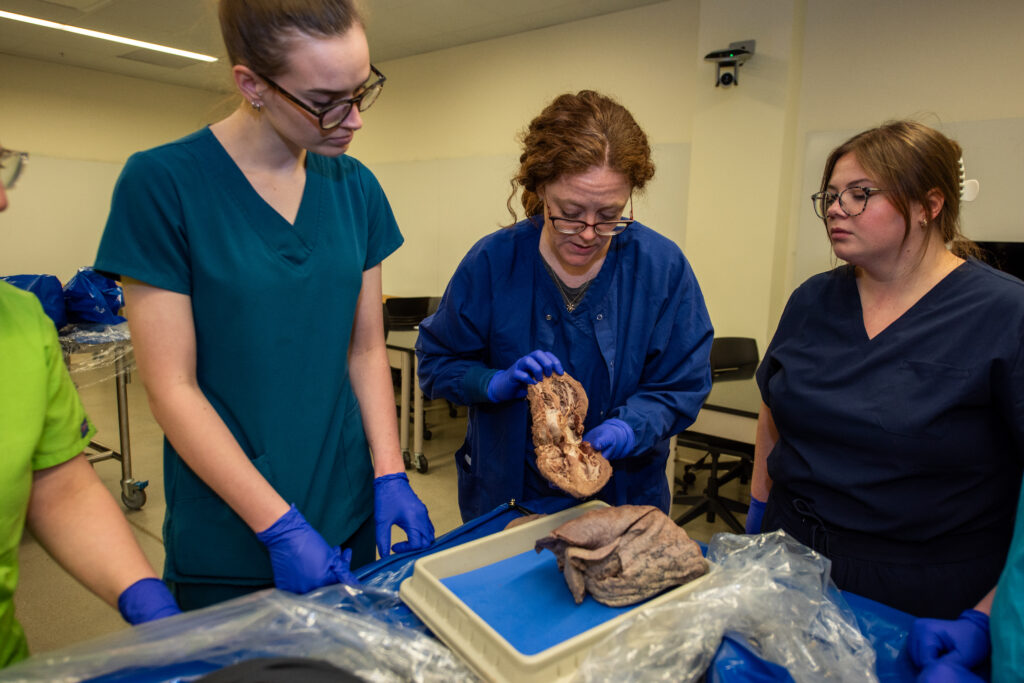
According to the American Association of Pathologists’ Assistants (AAPA), Pathologists’ Assistants (PathAs) macroscopically examine and prepare tissue and surgical specimens submitted to a laboratory. They also assist with postmortem examinations.
PathAs work under the supervision of a Pathologist (physician) who will make an ultimate diagnosis. Work environments include hospitals, pathology labs, reference labs, forensic labs, morgues, and academic settings.
The Employ a PA page on the American Association of Pathologists’ Assistants website gives examples of salary ranges based on work experience. We suggest using that as well as other job search websites to find positions and see examples of salaries.
Learn more about careers in laboratory science by visiting laboratorysciencecareers.com or whatsmynext.org.
UW-Madison does not offer a Pathologists’ Assistant (PathA) program. While this field is not among CPHA’s primary areas of advising expertise, we are here to support you in exploring the career, building helpful experiences, and navigating some aspects of professional program applications. Talk with us if you have questions!
On this page: Degree & Certification Paths | Explore Your Interest in PathA | Preparing for a PathA Program | Find a Program & Apply | Career Resources | Related CPHA Canvas Courses
Degree & Certification Paths
Become a PathA by completing the following steps:
- Complete a bachelor’s degree (often in a life science field) and take pre-requisite courses.
- Complete a two-year, NAACLS accredited Pathologists’ Assistant master’s program that includes didactic coursework and clinical rotations.
- Pass the American Society for Clinical Pathology (ASCP) board of certification exam.
- Maintain the certification by completing continuing education credits.
Explore Your Interest in PathA
Shadowing & Informational Interviews
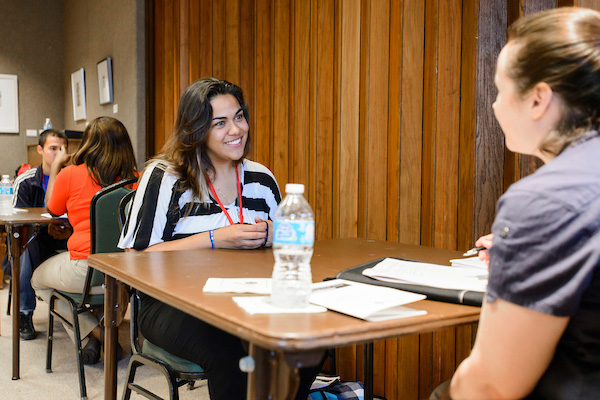
An excellent way to explore your interest in the profession is by shadowing and talking with PathAs. Look for PathAs on LinkedIn, Instagram, or TikTok to see if they are willing to talk about their career. Reach out to professional programs to see if they can connect you with a student or faculty member. Most PathA programs either require or strongly recommend shadowing.
Volunteering
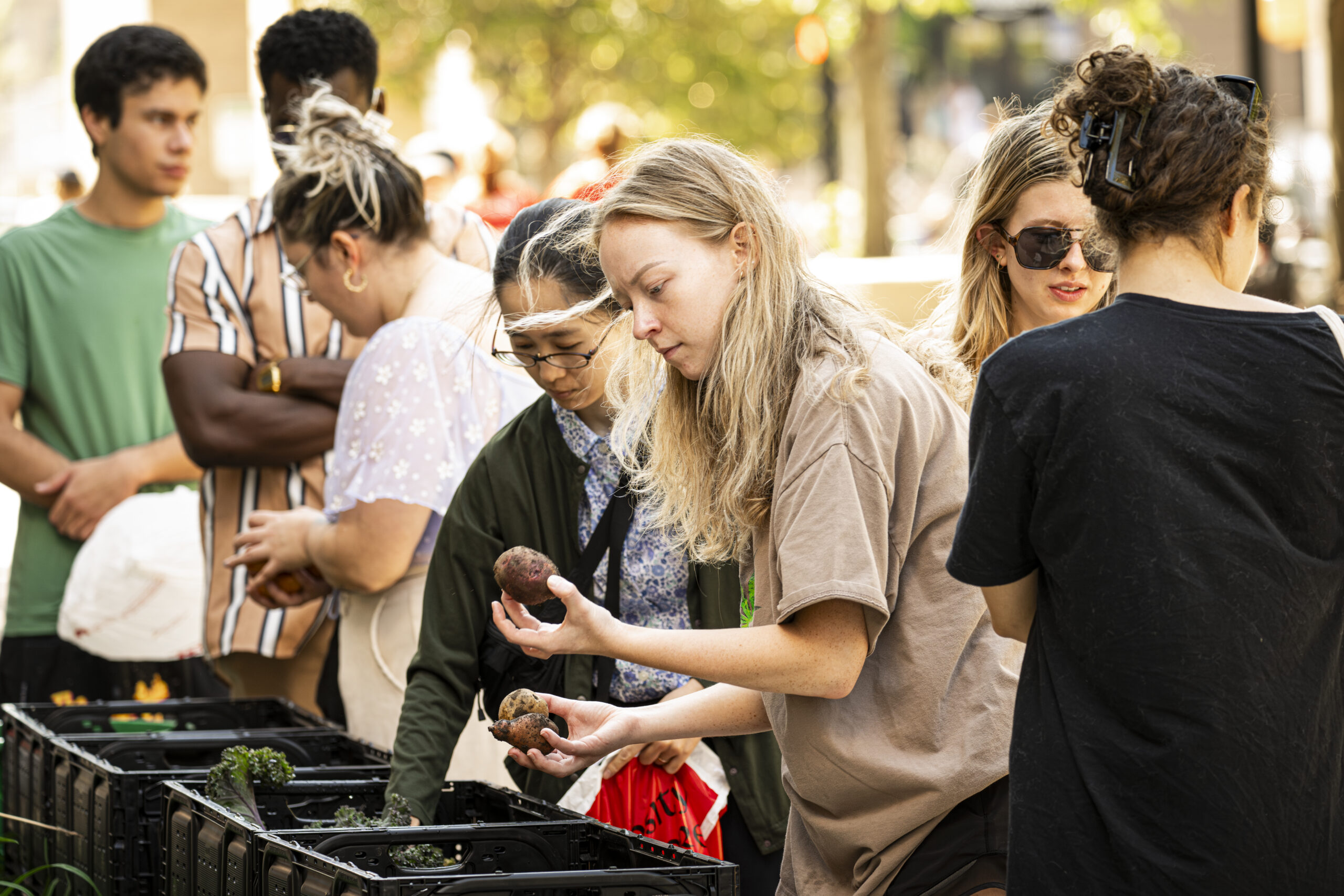
Programs look for applicants who demonstrate a sustained commitment to serving others. Learn more about opportunities to volunteer in clinical and non-clinical settings.
Jobs & Certifications
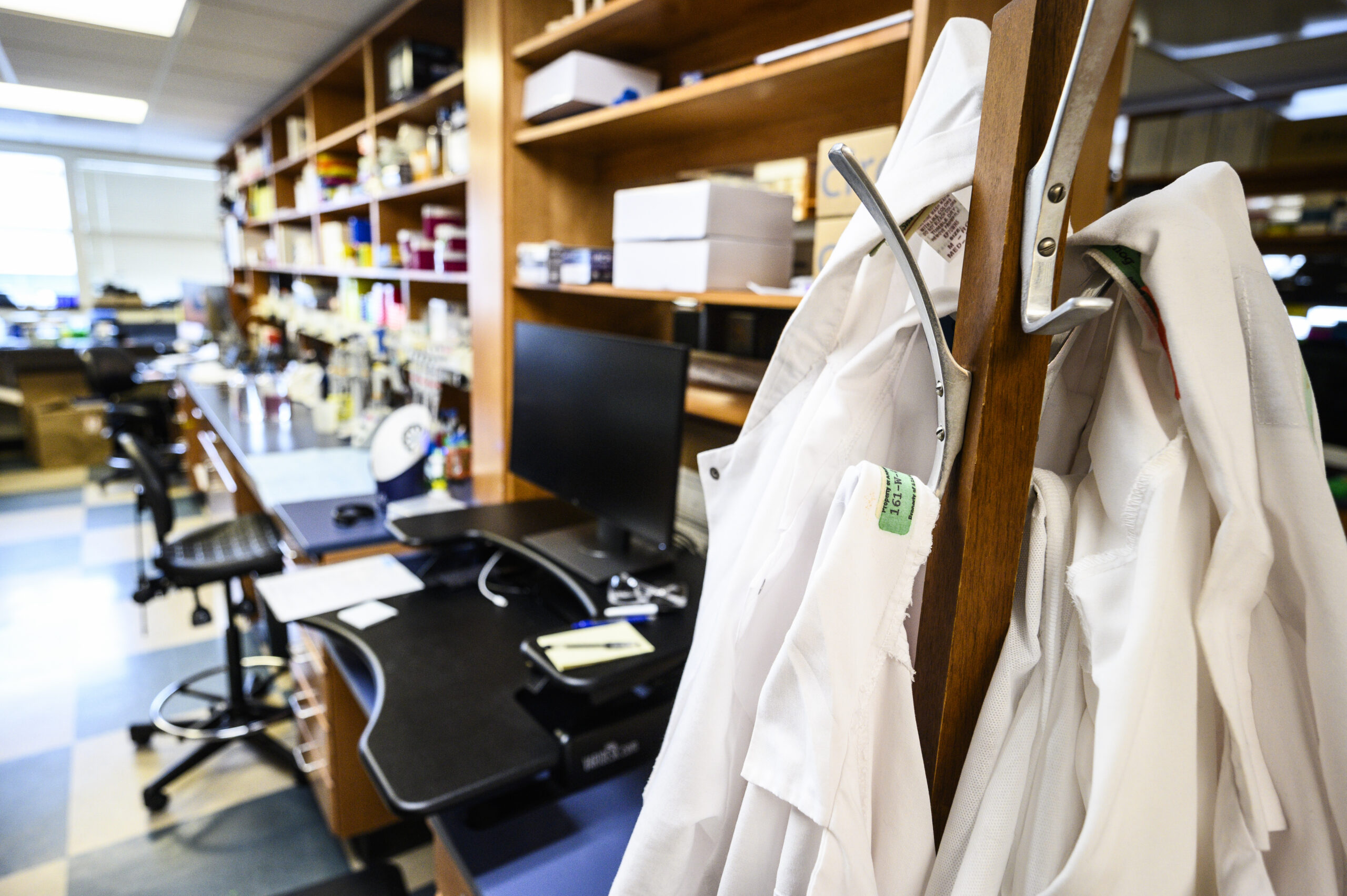
Getting a job in a clinical laboratory or research laboratory setting is a great way to learn about the practical aspects of the field. Consider specimen processing, phlebotomy, or laboratory assistant positions. Confirm that this work is something you enjoy!
Preparing for a PathA Program
PathA Required Coursework
Requirements vary from school to school, so it’s always necessary to consult program websites. Find a list of programs via the links above.
Pre-requisite courses may include:
| Topic | Credits/Semesters | UW-Madison Courses |
|---|---|---|
| General Chemistry | 8-10 credits or 2 semesters | Choose one of the following sequences: Chemistry 103-104 Chemistry 109 |
| Organic Chemistry | 3-8 credits or 1-2 semesters | Choose one: Chem 341-342 Elementary Organic Chemistry Chem 343/345/344 Introductory and Intermediate Organic Chemistry with lab |
| Biology | 5-10 credits | Choose one of the following sequences: Zoology 101-102 + an additional bioscience course Options include: Genetics, Microbiology, Cell Biology, Immunology Note: you may need to do an additional bio-science course with lab Biology 151-152 Biocore 381-382 AND 383-384 satisfies Intro to Bio requirements *Biocore: Students must apply to enroll in Biocore. For more information, visit the Biocore Website |
| Biochemistry | 3 credits | Biochem 501 |
| Anatomy with lab | 4-5 credits | Anatomy & Physiology 337- lecture Anatomy & Physiology 338 – lab |
| Physiology with lab | 4-5 credits | Anatomy & Physiology 335 – lecture & lab |
| Microbiology | 5 credits or 1 semester with lab | Choose one of the following options: Microbio 101-102 Microbio 303-304 |
| Math | Schools like to see math at the college level | |
| Humanities | Take 6 credits of English | Advice for Finding English Courses |
| Advanced Biology | Some programs require additional upper-level science coursework | Some suggestions include: Cell Biology 570 Immunology 341 Genetics 466 Neurobio 523 Oncology 401 Zoo 400 Biochem 510 *Biocore 485-486 Organismal Biology lecture/lab *Must be enrolled in the Biocore program |
Standardized tests are not always required, but some programs may recommend or require the GRE or MCAT. The module “Prepare for the GRE” on our “Applying to Health Professions” Canvas course has more information on study plans, resources, and tips. Our MCAT 101 Canvas course will help you prepare for the MCAT.
Find a Program & Apply
The National Accrediting Agency for Clinical Laboratory Sciences (NAACLS) has a program directory with information on accredited pathologist’s assistant programs in the US and abroad. (Select “Pathologists’ Assistant” under “Program Type.”) See also: our list of PathA programs.
Learn about Carroll University’s Master of Science in Pathologists’ Assistant Studies program. This is the first PathA program in Wisconsin. Carroll’s program should appear on the directories above once they admit their first class and continue on in the NAACLS accreditation process. Learn more by signing up for an info session or reaching out via the contact information listed on their website.
All accredited programs will have you apply directly on their website. Applications open throughout the year, and programs could start in summer, fall, or January. Some schools have priority deadlines, so it can be important to apply early. Others will have one deadline. The entire application process takes around one year.
Reach out to schools directly to request a fee waiver if application costs make applying prohibitive.
Career Resources
Related CPHA Canvas Courses
Pre-Health 101
If you are a first year student or healthcare is a new interest, begin by signing up for Pre-Health 101: our free, self-paced online orientation course. It provides an overview of pre-health classes, activities, application timelines, and more.
Applying to Health Programs
CPHA runs a Canvas course called Applying to Health Programs, a non-credit course designed to help you with the process of applying to programs like PathA programs.
MCAT 101
CPHA runs a Canvas course called MCAT 101, a non-credit course designed to help you with the process of preparing for the MCAT. On this course, you’ll find tips on creating a study plan, tracking your progress, using stress to your advantage on the test, and more!