Pharmacy
About Pharmacy
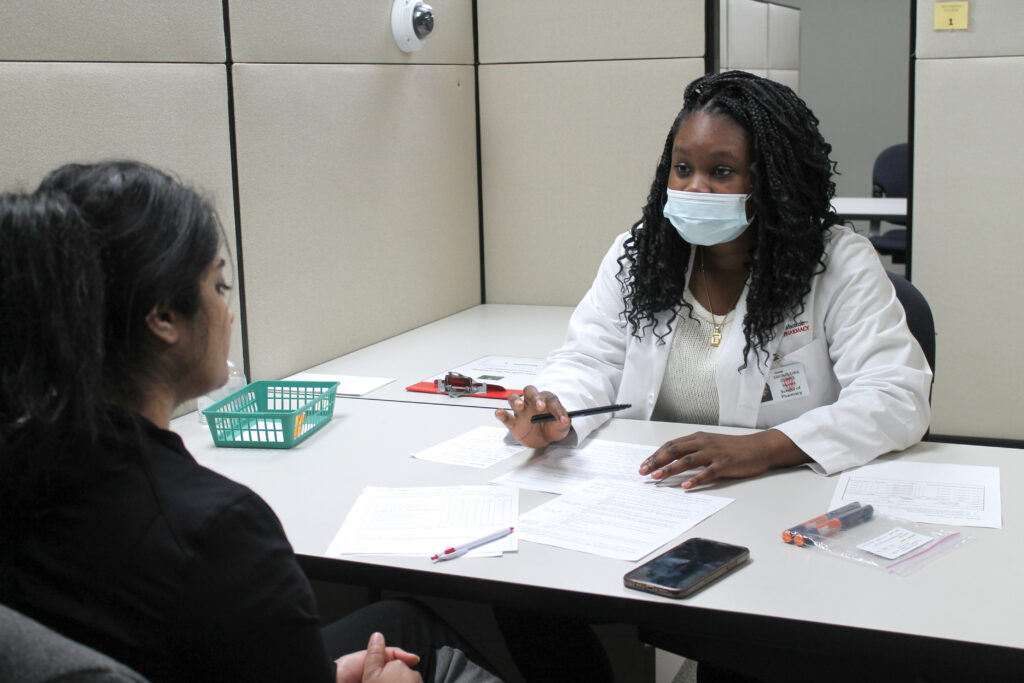
Pharmacists are highly trained medication experts who play a vital role on healthcare teams in providing patient care. When patients receive a diagnosis, medication is often the most common course of treatment. Pharmacists understand the most about the complexity of drug therapies and are important to patient recovery.
Pharmacy is practiced in a wide range of settings: community pharmacies, hospitals, outpatient clinics, specialty pharmacies, long term care facilities, the pharmaceutical industry, mail service, managed care, government agencies, research, and more.
Pharmacists are important members of the health care team. They make a difference in their communities–from treating diabetes and heart conditions to developing new medications.
Learn more about Pharmacy careers at pharmacyforme.org. For the most up-to-date salary information, visit the U.S. Bureau of Labor Statistics website.
In addition to the resources below, we encourage you to connect directly with staff at UW’s Pharmacy program. While Pharmacy programs are not among CPHA’s primary areas of advising expertise, we are here to support you in exploring the career, building helpful experiences, and navigating some aspects of professional program applications. Talk with us if you have questions!
On this page: Degree & Certification Paths | Explore Your Interest in Pharmacy | Preparing for a Pharmacy Program | Find a Program & Apply | Career Resources | Related CPHA Canvas Courses
Degree & Certification Paths
A Doctor of Pharmacy (PharmD) degree is an approximately 3-4 year professional degree. Most PharmD degrees do not require a bachelor’s degree first, but you do need to complete a set of college prerequisite courses and a specific number of college credits to apply. Graduates will need to take the North American Pharmacist Licensure Examination (NAPLEX) and also be assessed in the laws and regulations of each state in which they practice by taking the Multistate Pharmacy Jurisprudence Examination (MPJE). Learn more about both exams on the National Association of Boards of Pharmacy website. Some Pharmacists will pursue additional residency or fellowship training after Pharmacy school.
These degrees prepare students for careers in academic medicine or research. Graduates might work on developing new medication or improving medication delivery. Learn more at pharmgrad.org and on the UW-Madison Pharmaceutical Sciences Division website.
Some schools of pharmacy offer opportunities for students to earn a dual degree (i.e. PharmD/MPH or PharmD/MBA). Dual degree programs give students additional training in fields like public health or business that can then be applied to their Pharmacy practice.
Explore Your Interest in Pharmacy

Shadowing & Informational Interviews
An excellent way to explore your interest in pharmacy is by observing providers. Shadowing pharmacists shows you what their day is like and how they work with patients and others within the healthcare team. Conduct informational interviews with providers and ask them how pharmacy has changed since the start of their practice.

Volunteering
Pharmacy programs look for applicants who demonstrate a sustained commitment to serving others. Learn more about opportunities to volunteer in clinical and non-clinical settings. Consider volunteering with a charitable pharmacy such as the St. Vincent de Paul Charitable Pharmacy.
Jobs & Certifications
Getting a job in a pharmacy setting is a great way to learn about the practical aspects of the field. Consider pharmacy tech positions at hospitals, retail pharmacies, and community pharmacies. Confirm that this work is something you enjoy!
Additional Exploration Resources
Consider taking Pharmacy 225: Pharmacy Exploration Seminar
- This course is taught in a seminar format with guest speakers, readings, videos, discussions, participation and reflective assignments related to the following topics: pharmacy education process from admission to advanced training; contemporary pharmacy practice, career pathways, and postgraduate opportunities; medical terminology, common drugs, and diseases; public health, health literacy, and communication; interprofessional health provider practice; pharmacist impact on patient care.
- You’ll build connections with UW School of Pharmacy students, faculty, and staff, take field trips to pharmacies, and learn about the application process.
UW-Madison’s PharmD program has helpful videos about the profession on their YouTube channel as well as opportunities to connect with a PharmD student.
Preparing for a Pharmacy Program
Pharmacy Required Coursework
Requirements vary from school to school, so it’s always necessary to consult program websites. Find a list of programs via the links below.
Most pharmacy programs do not require applicants to complete a bachelor’s degree, including the UW-Madison School of Pharmacy. However, they all require different prerequisite courses that applicants must complete at a college or university.
| Topic | Credits/Semesters | UW-Madison Courses |
|---|---|---|
| Math | 3-5 credits or 1 semester | Most pharmacy schools require at least one semester of calculus. Choose one of the following: Math 171-217 Math 211 Math 221 |
| Statistics | 3 credits or 1 semester | Statistics 301 Statistics 371 An introductory statistics course in your major department |
| General Chemistry | 8-10 credits or 2 semesters | Choose one of the following sequences: Chem 103-104 Chem 109* Chem 115-116 (intended for Chemistry majors) *Many accept Chem 109 as equivalent to two semesters of inorganic chemistry; some may ask for a letter from the UW-Madison Chemistry Department describing the condensed nature of Chem 109. See Pre-Health Advising for more information if you have taken Chem 109 |
| Organic Chemistry | 6-8 credits or 2 semesters with labs | Chem 343: Introductory Organic Chemistry Chem 345: Intermediate Organic Chemistry Chem 344: Organic Chemistry Lab |
| Biology | 8-10 credits or 2 semesters | Choose one of the following sequences: Zoology 101-102 and an additional bioscience course with lab such as Botany 130, Anat&Phy 335/435, OR Anat&Phy 337 AND 338) Biology 151-152 Biocore 381-382 AND 383-384 satisfies Intro to Bio requirements *Biocore: Students must apply to enroll in Biocore. For more information, visit the Biocore Website |
| English/Public Speaking | 6 credits or 2 semesters | Most pharmacy schools require 6 credits of English, Literature, or Public Speaking. |
| Physics | 8-10 credits or 2 semesters with labs | Choose one of the following sequences: Physics 103-104 (algebra-based) Physics 201-202 (calculus-based; recommended for Engineering majors) Physics 207-208 (calculus-based; recommended for Life Science majors) EMA 201 + Physics 202 + BME 315 (for BME majors) Physics 247/248/249 (for Physics majors) * If physics is required for your major, select the sequence recommended by your major. If physics is not required by your major, physics 103-104 is an appropriate choice |
| Additional Coursework (Sometimes Required) | Requirements vary depending by program | Biochemistry 501 Microbiology 101/102 OR 303/304 A&P 335 OR 435 A&P 337/338 Genetics 466 ECON 101 PSYCH 202 Other Social Science |
Find a Program & Apply
The American Association of Colleges of Pharmacy (AACP) has a school directory with information on pharmacy programs in the US, Puerto Rico, and Lebanon (including those that do not participate in PharmCAS and PharmGrad).
Most accredited PharmD programs use a centralized application called PharmCAS, which typically opens in mid-July. Many schools utilize a rolling admissions process which typically includes priority and final deadlines. The entire process takes about a year!
The PharmCAS Help Center shares more information about application components and fee waiver program.
Career Resources
-
Accreditation Council of Pharmacy Education (ACPE)
-
American Association of Colleges of Pharmacy (AACP)
-
American Pharmacists Association (APhA)
-
National Association of Boards of Pharmacy (NABP)
-
Association of Black Health-systems Pharmacists (ABHP)
-
Minority Women Pharmacists Association (MWPA)
-
FinAid’s list of Loan Forgiveness Programs
-
APhA’s Student Scholarship Program
-
AACP’s Financial Aid and Scholarships page
-
Pharmacy Times’ Top Scholarships page
Related CPHA Canvas Courses
Pre-Health 101
Our most important advising resource for first year students is Pre-Health 101, our online orientation on Canvas. It provides an overview of pre-health classes, activities, application timelines, and more.
Applying to Health Programs
CPHA runs a Canvas course called Applying to Health Programs, a non-credit course designed to help you with the process of applying to programs. In this course, you’ll learn about the application, getting organized, writing essays, preparing for the GRE, school selection, paying for the application and school, interviews, and more.